


What is Jurisdiction in Criminal Law?
Did you know that over 70% of criminal cases involve complex jurisdictional questions? Understanding jurisdiction in criminal law is absolutely fundamental to the entire legal system. It’s the power or authority of a court to hear and decide a case. Without proper jurisdiction, any legal proceedings are invalid. This article delves into the intricate world of criminal jurisdiction, exploring its different types and implications.
Defining Jurisdiction

At its core, jurisdiction refers to the official power to make legal decisions and judgments. In the context of criminal law, it specifically denotes the authority of a court to try a criminal offense and impose punishment. This authority is not arbitrary; it’s meticulously defined by laws and constitutional principles. Several factors determine whether a particular court has jurisdiction over a criminal matter.
The Pillars of Criminal Jurisdiction
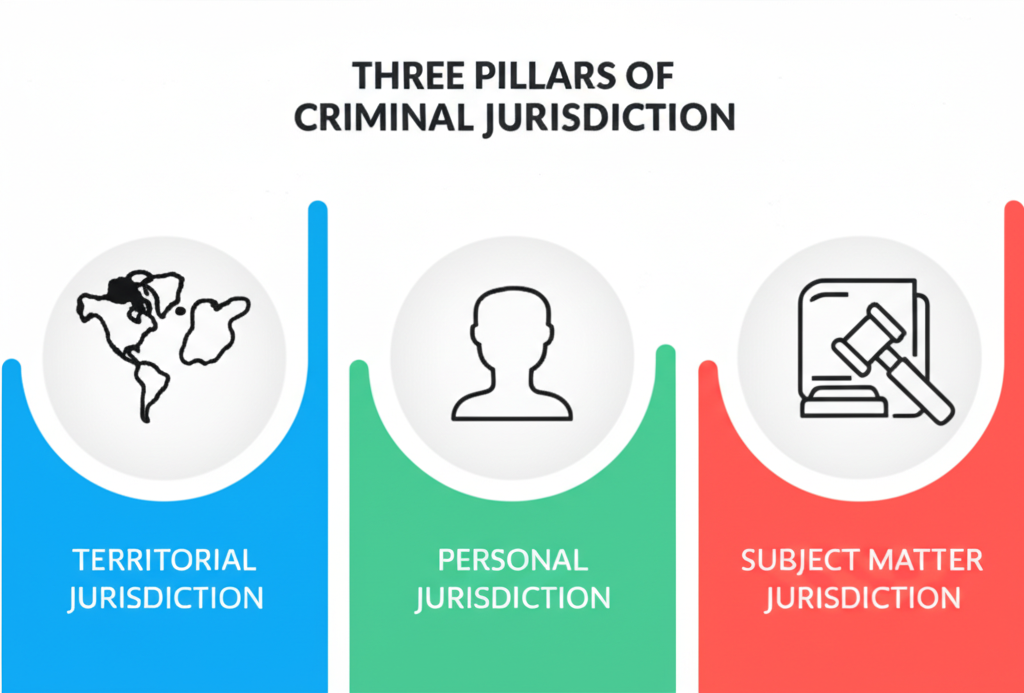
Criminal jurisdiction is generally categorized into three main types:
- Territorial Jurisdiction: This is the most common form. It means a court has the power to hear cases involving crimes committed within a specific geographical area. This area can be a state, county, city, or even a federal district.
- Personal Jurisdiction (In Personam Jurisdiction): This type of jurisdiction refers to the court’s power over the defendant. For a court to have personal jurisdiction, the defendant must have sufficient connection to the territory where the court is located. This is often established through presence in the jurisdiction, residency, or committing a crime within it.
- Subject Matter Jurisdiction: This refers to the court’s authority to hear a particular type of case. For instance, a state court might have jurisdiction over misdemeanors and felonies, while a federal court might only have jurisdiction over federal crimes.
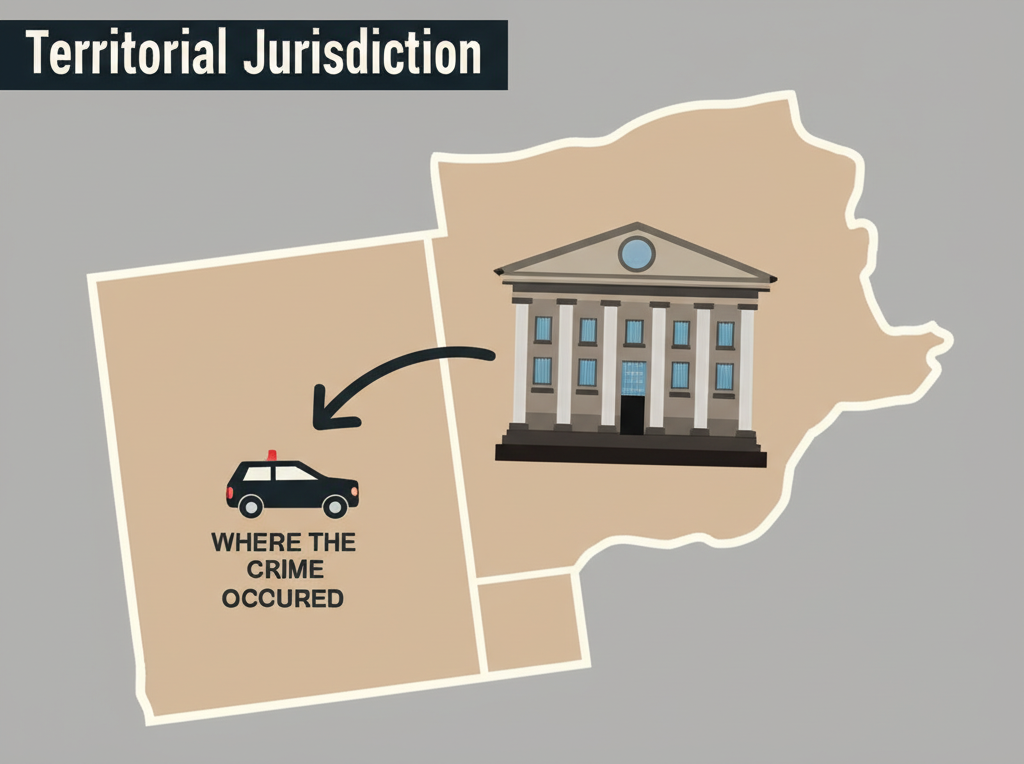
Territorial Jurisdiction: Where the Crime Occurred
Territorial jurisdiction is the bedrock of criminal law. The general principle is that a crime is prosecuted in the jurisdiction where it was committed. This concept is crucial for several reasons:
- Fairness to the Defendant: It ensures that individuals are tried in a location where they have a connection to the alleged offense, often where evidence and witnesses are more readily available.
- Evidence and Witnesses: Locating the trial near the crime scene often facilitates the collection and presentation of evidence and the appearance of witnesses.
- Local Laws: Crimes are typically prosecuted under the laws of the jurisdiction where they occurred.
Extending Territorial Reach
While the situs of the crime is paramount, territorial jurisdiction can extend beyond the immediate geographical boundaries in certain situations:
- Conspiracy: If a conspiracy is formed in one jurisdiction and overt acts in furtherance of the conspiracy occur in another, both jurisdictions may have territorial jurisdiction.
- Continuing Offenses: Crimes that occur over a period or span multiple locations can be prosecuted in any jurisdiction where part of the offense took place.
- Accessory Liability: Individuals who aid or abet a crime in one jurisdiction, even if the principal crime occurs elsewhere, may be subject to jurisdiction in the location of their aiding and abetting.
Federal jurisdiction often comes into play when a crime crosses state lines or violates federal law. According to the U.S. Department of Justice, federal courts handle cases involving crimes such as terrorism, cybercrime, and offenses occurring on federal property. Source: U.S. Department of Justice
Personal Jurisdiction: The Court’s Power Over the Accused
Personal jurisdiction (or in personam jurisdiction) is the court’s authority over the person of the defendant. Even if a crime occurred within a court’s territorial boundaries, the court must also have personal jurisdiction over the accused to proceed. This is rooted in due process principles, ensuring that defendants are not subjected to the power of a court without adequate notice and a connection to the forum.
Establishing Personal Jurisdiction
Courts typically establish personal jurisdiction through:
- Physical Presence: If a defendant is physically present within the jurisdiction when served with a summons or arrest warrant, the court generally acquires personal jurisdiction.
- Domicile or Residency: A defendant who resides or is domiciled within the jurisdiction is subject to its courts’ authority.
- Consent: A defendant can voluntarily consent to the jurisdiction of a court, waiving any objections.
- Minimum Contacts: For defendants outside the jurisdiction, courts may assert personal jurisdiction if the defendant has purposefully availed themselves of the privilege of conducting activities within the forum state, thus invoking the benefits and protections of its laws. This is a complex area, often litigated in cases involving out-of-state defendants.
Extradition and Jurisdiction
When a defendant is located in a different state or country, the concept of extradition becomes vital. Extradition is the formal process by which one jurisdiction surrenders an individual to another jurisdiction for prosecution or punishment for crimes committed in the latter.
- Interstate Extradition: Governed by the U.S. Constitution (Article IV, Section 2), this process involves one U.S. state requesting the return of a fugitive from another U.S. state.
- International Extradition: This involves treaties between countries that outline the procedures and conditions for surrendering fugitives. The U.S. has extradition treaties with over 100 countries. Source: U.S. Department of State
Subject Matter Jurisdiction: The Court’s Authority Over the Crime Type

Subject matter jurisdiction dictates whether a court is competent to hear a particular class of cases. Different courts are established with specific powers, and a court cannot hear a case that falls outside its designated authority.
Types of Courts and Their Jurisdiction
- State Courts: These courts handle the vast majority of criminal cases. They are typically divided into:
- Courts of Limited Jurisdiction: These courts hear less serious offenses, such as traffic violations and minor misdemeanors. Examples include municipal courts or justice of the peace courts.
- Courts of General Jurisdiction: These courts, often called superior courts or circuit courts, have the authority to hear all types of criminal cases, including felonies and serious misdemeanors.
- Federal Courts: These courts have jurisdiction over crimes defined by federal law. This includes offenses like:
- Crimes occurring on federal land.
- Interstate crimes.
- Crimes involving federal agencies or officials.
- Crimes related to immigration, bankruptcy, and patent law.
Exclusive vs. Concurrent Jurisdiction
Sometimes, jurisdiction can be exclusive, meaning only one court system can hear the case. Other times, it can be concurrent, where multiple court systems (e.g., state and federal) have the authority to hear the same case. For instance, a crime like drug trafficking that violates both state and federal laws could potentially be prosecuted in either state or federal court.
Challenges and Complexities in Jurisdiction
Determining jurisdiction is not always straightforward. Several factors can lead to complex jurisdictional disputes:
- Cybercrime: Crimes committed online can be particularly challenging, as the perpetrator, victim, and servers may be located in different jurisdictions, raising questions about where the crime truly occurred and which laws apply.
- Crimes on International Waters or Airspace: Offenses committed on ships or airplanes can involve complex jurisdictional rules based on the vessel’s flag state or nationality.
- Crimes Committed by or Against Diplomats: International law and treaties often govern these situations, potentially granting immunity or specifying particular courts.
- Dual Sovereignty: This doctrine allows both the federal government and a state government to prosecute an individual for the same criminal act if it violates the laws of both sovereigns. This is permissible under the U.S. Constitution. Source: Cornell Law School Legal Information Institute
The Role of Jurisdiction in Legal Proceedings
Jurisdiction is a threshold issue. If a court lacks jurisdiction, it cannot proceed with a trial. A defendant can challenge jurisdiction at any stage of the proceedings, even on appeal. A successful challenge can lead to the dismissal of charges, although the prosecution may be able to refile the charges in a court with proper jurisdiction.
Expert Insights on Criminal Jurisdiction
Legal scholars emphasize the importance of clear jurisdictional rules. Professor Sarah Jenkins, a renowned criminal law expert, states, “Well-defined jurisdictional boundaries are essential for ensuring predictability, fairness, and the efficient administration of justice. Ambiguity in jurisdiction can lead to significant delays and undermine public confidence in the legal system.”
Conclusion
In summary, jurisdiction in criminal law is the critical authority that empowers courts to adjudicate criminal matters. It encompasses territorial, personal, and subject matter dimensions, each playing a vital role in determining which court has the legitimate power to try a case and impose a sentence. Understanding these principles is key to comprehending the structure and function of the criminal justice system. The complexities surrounding jurisdiction, especially in an increasingly interconnected world, highlight the ongoing need for clear legal frameworks and judicial interpretation.
Frequently Asked Questions (FAQs)
What is the primary basis for criminal jurisdiction?
The primary basis for criminal jurisdiction is typically territorial, meaning the crime occurred within the court’s geographical boundaries.
Can a person be tried in two different jurisdictions for the same crime?
Yes, under the dual sovereignty doctrine, a person can be tried by both state and federal authorities if the crime violates the laws of both sovereigns.
How does a court gain personal jurisdiction over a defendant?
A court gains personal jurisdiction through the defendant’s presence in the jurisdiction, residency, consent, or by establishing sufficient ‘minimum contacts’ with the forum.
What happens if a court realizes it lacks jurisdiction?
If a court lacks jurisdiction, it must dismiss the case. Any proceedings conducted without proper jurisdiction are considered void.
How does cybercrime complicate jurisdiction?
Cybercrime complicates jurisdiction because the criminal act, the perpetrator, and the victim can all be in different geographical locations, making it difficult to determine where the crime legally occurred.
What is the difference between subject matter and territorial jurisdiction?
Territorial jurisdiction concerns where the crime happened, while subject matter jurisdiction concerns the type of case a court is authorized to hear.
